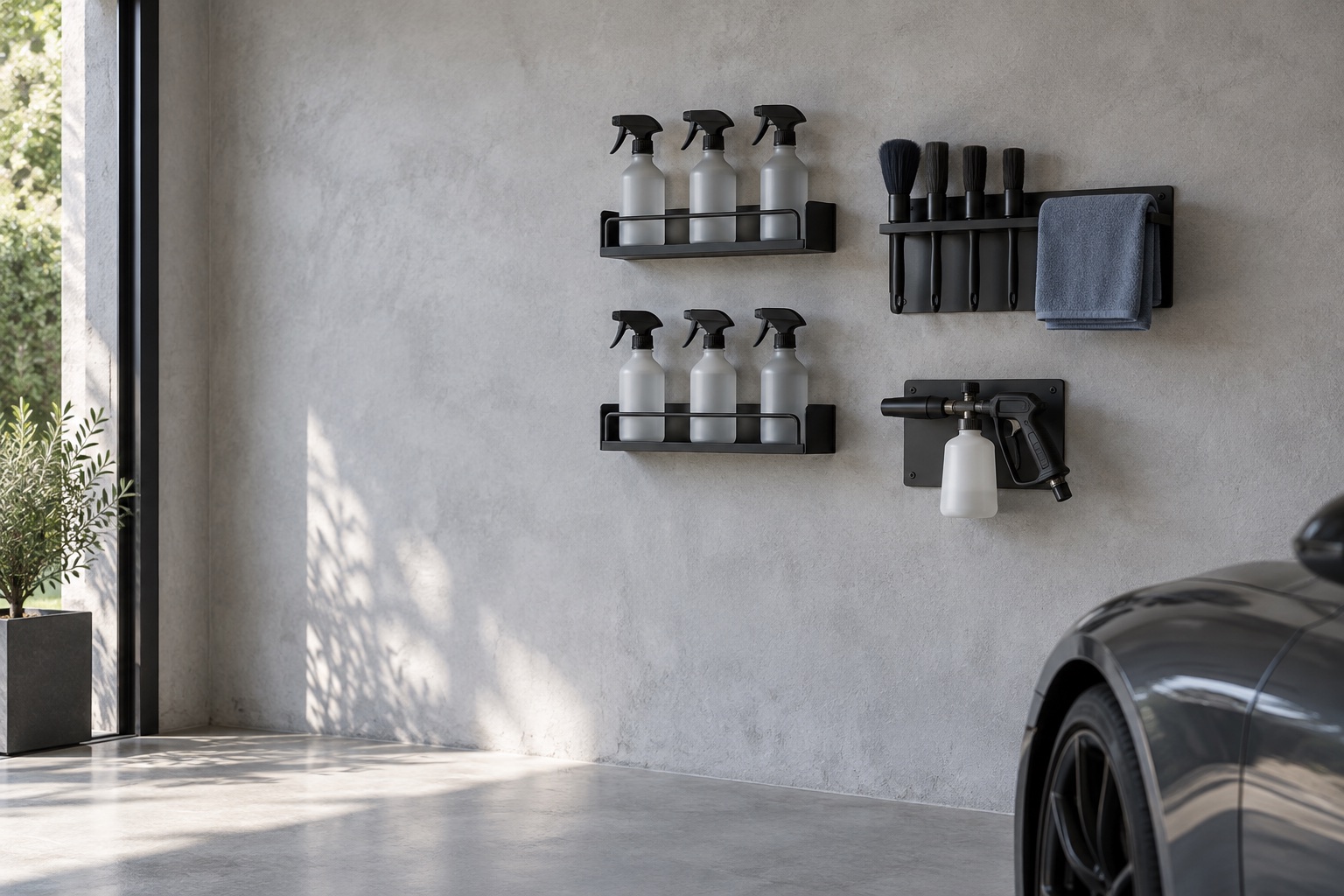
Give four everyday groups a home
A useful first wall does not need to hold the entire garage. It should keep the items that slow down your wash visible, easy to reach, and easy to return. Separate routine bottles and brushes from larger pump sprayers and pressure-wash accessories so each item can use the holder style that suits it.
- A bottle area for the products used on most washes
- A brush area that keeps handles visible and bristles clear
- A measured bay for one or two pump sprayers
- A dedicated storage point for a gun, wand, foam cannon, or tips—only after their exact interfaces are verified
Measure the wall, then the objects
Start with your storage categories, available wall width, preferred unit, and wall type. Then record each item's widest, tallest, and deepest points, including triggers, hoses, handles, and nozzles. Mark outlets, doors, shelves, and anything that needs clear access. These measurements turn a good-looking idea into a useful shortlist.
- Trace or photograph each item beside a ruler for later supplier checks
- Record the filled weight when a manufacturer requires a load check
- Leave a clear lift path above anything removed vertically
- Match final fasteners to the wall and the chosen product instructions
Build in two passes
Pass one is the smallest useful wall: the five to eight objects used most often. Pass two adds seasonal chemicals, extra towels, polishing tools, or a broader pressure-wash station only when the first layout proves itself. This keeps the first purchase focused and leaves room for real-world corrections.
- Essentials now: daily bottles, primary brush set, one sprayer, core wash accessories
- Later: backups, specialty chemicals, extra pads, machines, or cabinets
- Keep wet or drip-prone gear away from clean towels and electrical equipment
- Download the planning list before comparing any supplier SKUs
Choose a calm, useful first version
Aim for a wall that shortens the walk between storage and the car. Keep labels readable, leave room to lift each item out, and avoid filling every inch. Once the layout works through several washes, you can decide whether more storage would help or simply add clutter.
- Keep the most-used tools in the easiest reach
- Give wet accessories a separate, easy-to-clean area
- Leave one open space for a future tool
- Use the downloaded list to compare real products side by side
A few useful answers
Which items should I group together?
Group items that appear in the same part of your wash, while keeping wet accessories away from clean towels and pads.
Will the concept fit standard bottles and sprayers?
There is no reliable universal fit. Measure your exact items and compare those measurements with the final supplier drawings before buying or drilling.
What should go on the first wall?
Start with five to eight items you use on most washes. Add specialty tools only after the first layout proves useful.
Sources & further reading
Manufacturer information supports the referenced product details. Planning recommendations are our editorial interpretation. Recheck specifications for the exact variant you choose.